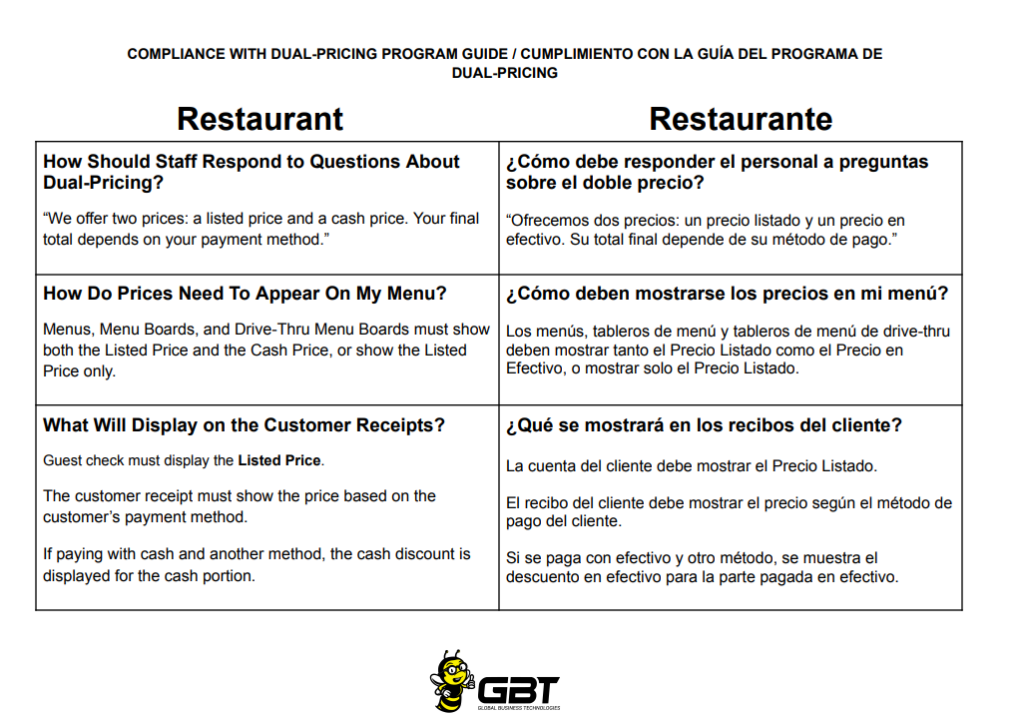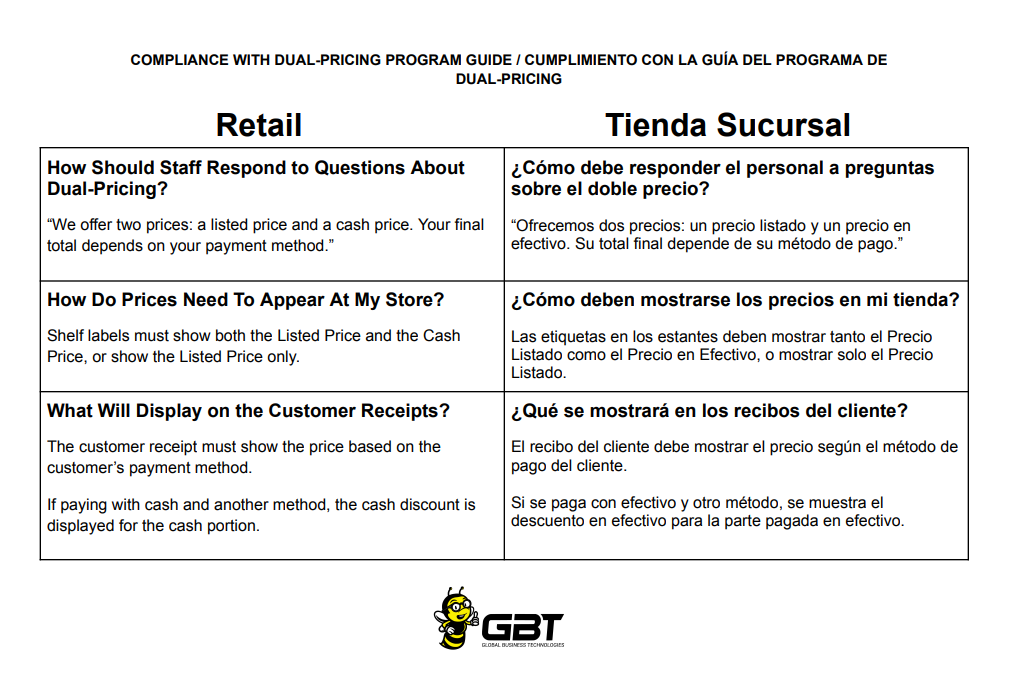
If you’ve recently implemented a dual-pricing program—or you’re thinking about it—you’ve probably run into the same challenge: explaining it clearly to both your staff and your customers.
That’s exactly why we created this quick-reference cheat sheet —to simplify compliance and keep everyone on the same page.
What Is Dual Pricing?
Dual pricing allows businesses to offer two prices:
A listed price (typically for card payments)
A cash price (with a built-in discount)
The final amount a customer pays depends on how they choose to pay.
Why It Matters
Done correctly, dual pricing helps offset rising processing costs while staying transparent and compliant. Done poorly… well, let’s just say confusion at checkout is not a great customer experience.
Key Guidelines to Follow
1. Be Clear and Consistent
Staff should confidently explain:
“We offer two prices: a listed price and a cash price. Your final total depends on your payment method.”
No improvising. No awkward guessing. Just clarity.
2. Display Pricing Properly
Retail: Shelf labels must show both prices or the listed price.
Restaurants: Menus and boards must follow the same rule.
Customers should never feel surprised at checkout.
3. Receipts Must Match Payment Method
Receipts reflect the actual payment method used.
Split payments? The cash discount applies only to the cash portion.
Why Use a Cheat Sheet?
This cheat sheet gives your staff:
A quick script for customer questions
Clear display requirements
Receipt guidelines in one place
Final Thought
Dual pricing isn’t complicated—but it does require consistency. With the right tools (like this cheat sheet), your team can stay compliant and confident without turning every transaction into a debate.